


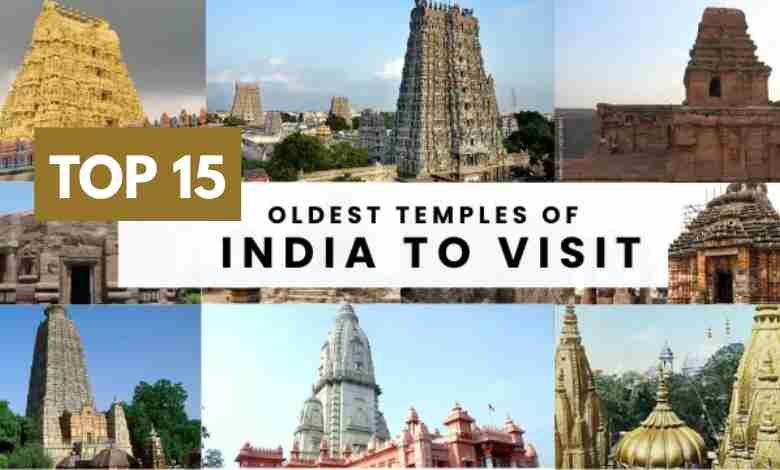
Oldest Temples in India: India is home to some of the oldest temples, which are places of worship and remarkable symbols of the country’s rich cultural and architectural heritage. These temples, many of which date back thousands of years, offer a glimpse into India’s spiritual history and the evolution of religious practices. Among these, the most ancient temple in India holds a special significance, often drawing pilgrims and historians alike for their historical and spiritual importance.
The oldest temples of India are not just structures; they are a testament to past civilisations’ artistic brilliance and architectural ingenuity. Temples like the Kashi Vishwanath in Varanasi and the Brihadeeswarar Temple in Tamil Nadu have stood the test of time, retaining their grandeur and mysticism. These temples reveal much about the history of Indian art, culture, and religious practices. The design and intricacy of these structures often reflect the deep devotion of the people who built them.
India’s oldest Indian temples are scattered across the country, each offering a unique architectural style and historical context. For instance, the Mundeshwari Temple in Bihar is considered one of the oldest surviving Hindu temples, showcasing ancient craftsmanship. These temples continue to inspire awe in visitors due to their detailed carvings, towering spires, and the calm spirituality they embody. The grandeur of old Indian temples also reflects India’s diverse religious traditions.
Whether it’s the Shaiva temples in the south or the Vaishnavite temples in the north, each temple is distinct, with specific rituals and deities. These temples serve as a cultural hub, offering not only a place of worship but also a sense of community and continuity across generations. India’s ancient temples are essential to the country’s heritage, often surrounded by myths, legends, and rich histories. They are revered not only for their religious significance but also for their architectural beauty, drawing tourists from all over the world. Visiting these historic temples in India offers a profound experience, connecting visitors with India’s past and spiritual essence.
Table of Contents
List of 15 Oldest Temples in India
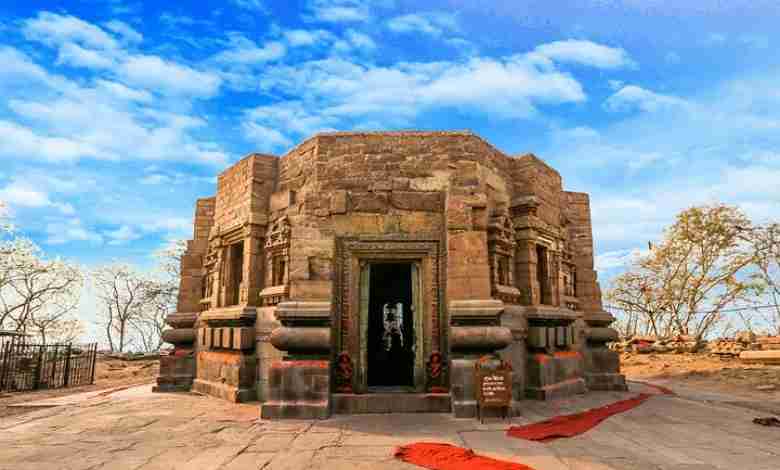
1. Mundeshwari Temple, Bihar – 108 CE
Key Details
- Location: The temple is situated on top of the Pavara (Piwara) hill, at an elevation of about 600 feet (183 meters), near Ramgarh village in the Kaimur district.
- Deities: It is dedicated to both Lord Shiva (worshipped as a unique four-faced, or Chaturmukha, Shiva Lingam) and Goddess Shakti (Maa Mundeshwari, a form of Goddess Durga/Vaarahi).
- Architecture: The temple is built of stone in a rare octagonal plan, an early example of the Nagara style of temple architecture.
- Dating: While some inscriptions date to 635 CE, the ASI has dated the structure to around 108 CE, making it one of the oldest standing Hindu temples in Northern India.
- Festivals: Major festivals celebrated here are Navratri and Shivratri, which attract a large number of pilgrims.
Unique Ritual: The Bloodless Sacrifice
- The goat is brought before the goddess and mantras are chanted.
- The animal goes still, as if fainting or falling asleep.
- After the ritual is complete, the priests sprinkle rice grains and flowers on the goat, and it regains consciousness, unharmed.
- The goat is then returned to the devotee and released, symbolizing acceptance of the offering without violence.
Visiting Information
- Timings: The temple is generally open daily from 6:00 AM to 7:00 PM, though there might be a short break around midday.
- Entry Fee: There is no entry fee for visitors.
- Accessibility: The temple is accessible by a road that leads close to the hilltop, followed by a short climb of about 30 stairs to the main gate.
2. Brihadeeswarar Temple, Tamil Nadu – 1010 CE
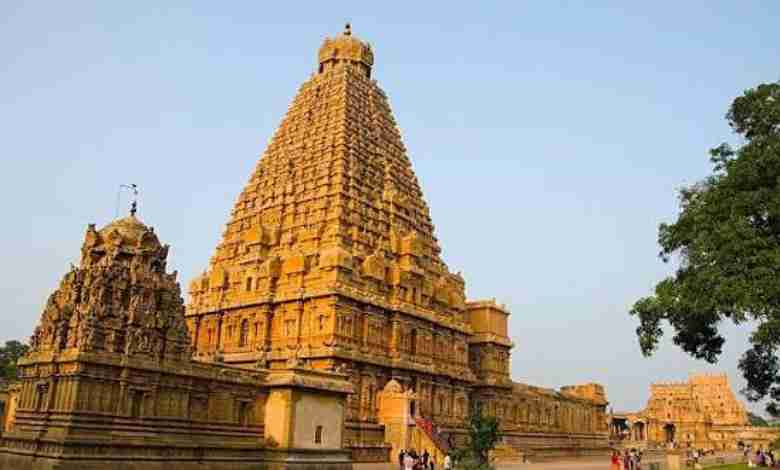
The Brihadeeswarar Temple, located in Thanjavur, Tamil Nadu, is a magnificent example of Chola architecture and a UNESCO World Heritage Site. Dedicated to Lord Shiva, it is one of India’s largest and most prized architectural sites, renowned for its towering Vimana (temple tower) and single-stone Nandi statue.
Essential Information
- Location: The temple is on the south bank of the Cauvery River in Thanjavur, Tamil Nadu.
- Construction: It was built by the Chola emperor Rajaraja I between 1003 and 1010 CE.
- Architecture: The temple is built entirely of granite and is a classic example of Dravidian architecture. The main Vimana reaches a height of 216 feet (66 meters), making it one of the tallest temple towers of its kind in the world.
- Deity: The primary deity is Lord Shiva, represented by a colossal Lingam.
- Nandi Statue: A massive statue of Nandi, the sacred bull of Shiva, stands guard at the entrance. It measures approximately 13 feet high and 16 feet wide and is sculpted from a single rock.
- UNESCO Status: The temple is part of the “Great Living Chola Temples” UNESCO World Heritage Site, along with the Airavatesvara Temple and the Gangaikondacholapuram Temple.
- Timings: The temple is open to visitors from 6:00 AM to 12:30 PM and 4:00 PM to 8:30 PM daily.
Architectural Marvels
- Towering Vimana: The main temple tower (Vimana) is 216 feet (66 meters) high, making it one of the tallest of its kind in the world.
- Massive Capstone: The bulbous structure (Kumbam) at the apex of the tower is carved from a single piece of granite and is estimated to weigh around 80 tons.
- Nandi Statue: A colossal statue of Nandi, Lord Shiva’s sacred bull, stands at the entrance. It measures approximately 13 feet high and 16 feet wide and is also carved from a single rock.
- Construction Without Mortar: The granite blocks were precisely cut and fitted together using an interlocking system, demonstrating advanced ancient engineering knowledge.
3. Mahabodhi Temple, Bihar – 260 BCE
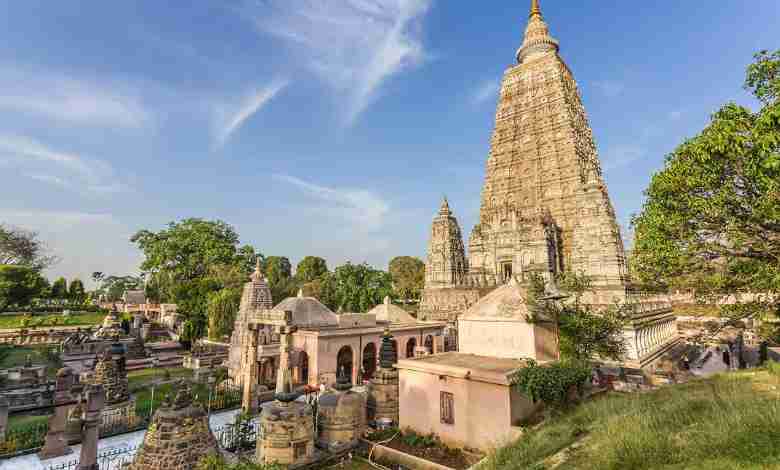
The Mahabodhi Temple in Bodh Gaya, Bihar, is a UNESCO World Heritage site. It marks the location where Gautam Buddha is said to have attained enlightenment. The temple complex includes a large pyramidal spire and several smaller stupas.
Key Details
- Location: The temple complex is located in Bodh Gaya, approximately 16 km from the Gaya district headquarters.
- Deity: Lord Buddha (Siddhartha Gautama).
- Significance: The site of Buddha’s enlightenment under the sacred Bodhi Tree.
- Architecture: The present temple, dating back to the 5th or 6th century CE (Gupta period), is one of the earliest large temples built entirely of brick that still stands in India. The main temple tower (Vimana) is approximately 55 meters (180 feet) tall.
Visiting Information
- Timings: The temple complex is open daily from 5:00 AM to 9:00 PM.
- Entry Fee: Entry to the temple complex is free of charge.
- Photography: A fee of ₹100 is charged for still cameras, and ₹300 for video cameras. Mobile phones and other electronic devices are generally prohibited inside the inner complex to maintain sanctity, with lockers available for storage.
- Dress Code: Visitors are expected to dress modestly and maintain silence within the complex.
Main Attractions within the Complex
- The Sacred Bodhi Tree: A direct descendant of the original pipal tree under which the Buddha meditated and attained Pali: Bodhi (enlightenment).
- Vajrasana (Diamond Throne): The stone platform where the Buddha sat in meditation, situated directly in front of the main temple under the Bodhi Tree.
- The Main Shrine: Houses a large, gold-painted statue of the Buddha in the Bhumisparsa Mudra (earth-touching posture).
- Seven Sacred Spots: The complex includes other sites where the Buddha spent the seven weeks after his enlightenment.
- Meditation Gardens and Stupas: The surrounding area features numerous ancient votive stupas and beautifully landscaped gardens for quiet contemplation.
How to Reach
- By Air: The nearest airport is Gaya International Airport, just a few kilometers away from Bodh Gaya.
- By Rail: Gaya Junction is the nearest major railway station, well-connected to major Indian cities.
- By Road: Bodh Gaya is about 115 km south of Bihar’s capital, Patna, and is easily accessible by bus, taxi, or auto-rickshaw.
4. Mahabalipuram Shore Temple, Tamil Nadu – 8th century CE
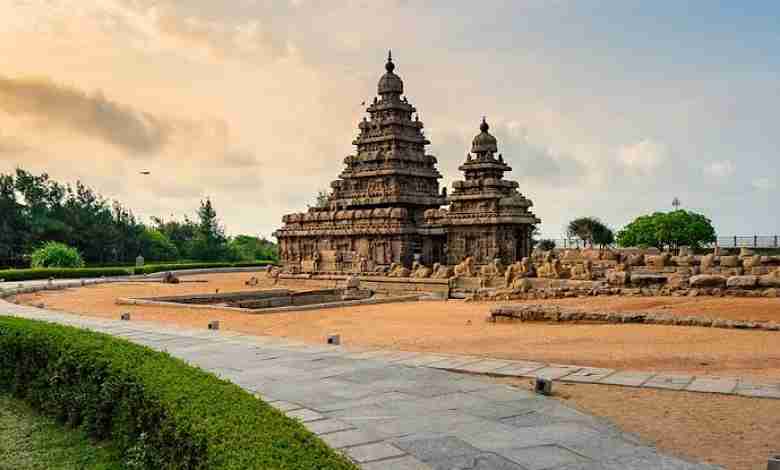
The Shore Temple in Mahabalipuram, Tamil Nadu, is an architectural marvel and a UNESCO World Heritage Site that overlooks the Bay of Bengal. It is one of the earliest known structural stone temples in South India, dating back to the 8th century CE.
Essential Information
- Location: Beach Rd, Mahabalipuram, Tamil Nadu 603104.
- Timings: The temple complex is open daily from 6:00 AM to 6:00 PM (sunrise to sunset).
- Entry Fee: The ticket for Indians is approximately ₹40 per person, and for foreign nationals it is around ₹600 per person. Children below 15 years typically have free entry. The ticket is often valid for other nearby monuments like the Pancha Rathas.
- Accessibility: The site offers a wheelchair-accessible entrance and free parking options are available.
Architectural and Historical Highlights
- Deities: The complex has two Shiva shrines and one Vishnu shrine. The main Shiva shrine features a unique sixteen-faced black basalt Shiva Lingam (Dharalinga).
- The “Seven Pagodas” Legend: The temple is widely believed to be the last of a series of seven magnificent temples that once stood along the coastline. The 2004 tsunami briefly exposed the remains of a collapsed temple offshore, lending credence to this legend.
- Erosion and Preservation: The temple’s proximity to the sea means it has been ravaged by wind and saltwater for centuries. A stone wall and various preservation efforts by the ASI are in place to protect it from further erosion.
- Green Energy Site: The Shore Temple is notably India’s first green energy archaeological site.
Planning Your Visit
- Best Time to Visit: The months of October to March offer pleasant weather for exploring the open complex. It is advisable to avoid visiting during midday due to the intense sun.
- Nearby Attractions: The ticket often covers access to the entire “Group of Monuments at Mahabalipuram,” which includes the Pancha Rathas, the Descent of the Ganges (Arjuna’s Penance), and various cave temples.
- Getting There: Chennai International Airport is the nearest major airport, about 55 km away, while Chengalpet Railway Station is the closest station, around 23 km away. Regular buses and taxis are available from major cities in Tamil Nadu.
Also Read: Top 10 oldest languages in the world still spoken today
5. Kailasa Temple, Maharashtra – 8th century CE
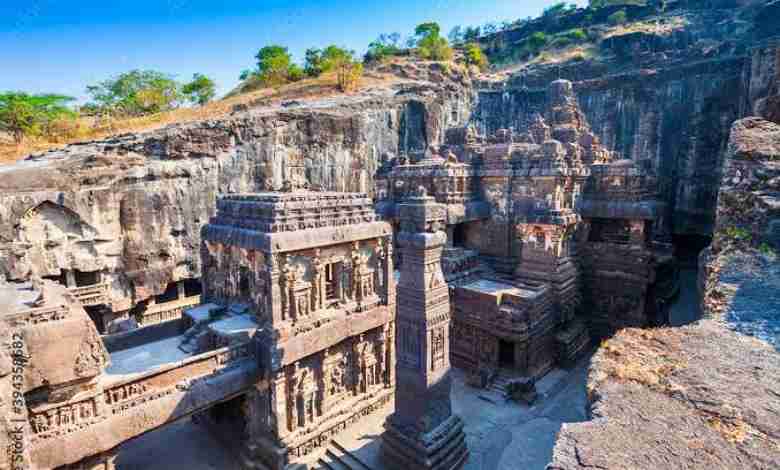
The Kailasa Temple at Ellora Caves, Maharashtra, is the world’s largest monolithic rock-cut Hindu temple and a spectacular engineering marvel. This massive structure, which is part of the UNESCO World Heritage Site of the Ellora Caves, was carved entirely from a single basalt rock, from top to bottom, in the 8th century CE.
Essential Information
- Location: The temple is Cave 16 within the Ellora Caves complex on the Aurangabad-Chalisgaon road, approximately 30 km from Aurangabad (now Sambhajinagar) in Maharashtra.
- Timings: The Ellora Caves (including the Kailasa Temple) are open daily from 6:00 AM to 6:00 PM, except on Tuesdays when the complex is closed.
- Entry Fee: The entry fee for Indian nationals and visitors from SAARC/BIMSTEC countries is approximately ₹40. For foreign nationals, the fee is around ₹600 (or USD 10). Entry is free for children under 15 years of age.
Architectural and Historical Highlights
- Engineering Marvel: An estimated 200,000 to 400,000 tons of rock were removed using only hammers and chisels to create the complex structure.
- Dimensions: The temple covers a massive area, measuring approximately 300 feet in length and 175 feet in width, and stands over 100 feet high.
- Intricate Carvings: The temple features detailed sculptures and panels depicting scenes from Hindu mythology, including the Ramayana and Mahabharata, and various avatars of Lord Vishnu.
- Symbolism: Two massive monolithic pillars and life-size stone elephants within the courtyard flank the main shrine, adding to the grandeur of the site.
Visiting the Complex
6. Jagatpita Brahma Temple, Rajasthan – 14th century CE
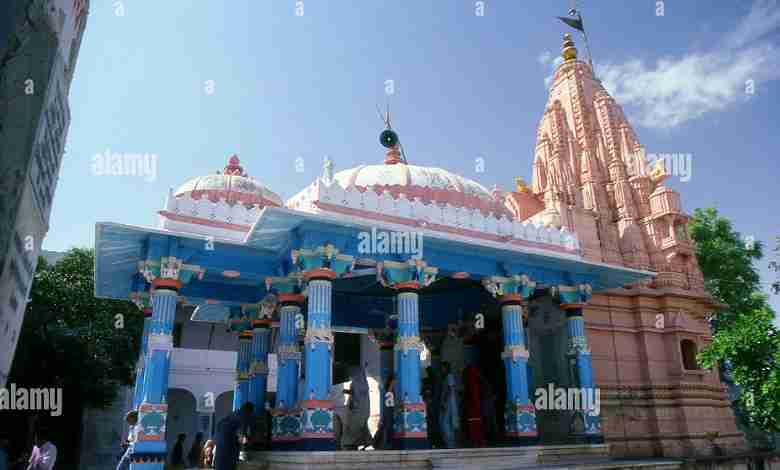
The Jagatpita Brahma Temple, located in Pushkar, Rajasthan, is a highly revered Hindu temple and is considered the most prominent of the few existing temples in India dedicated to the creator-god, Lord Brahma. While its origins are believed to be around 2,000 years old, the current structure dates back to the 14th century CE.
Essential Information
- Location: Brahma Temple Rd, Ganahera, Pushkar, Rajasthan 305022.
- Timings: The temple is open daily, generally from 6:00 AM to 1:30 PM and then from 3:00 PM to 9:00 PM in the summer (with slight variations in winter timings).
- Entry Fee: There is no entry fee to visit the temple complex.
- Photography: Photography is strictly prohibited inside the main temple sanctum.
Architectural and Historical Highlights
- Unique Structure: The temple is built primarily of marble and stone slabs and features a distinctive red pinnacle (shikhara) that can be seen from a distance.
- Deity: The inner sanctum houses a four-faced (chaturmukhi) idol of Lord Brahma in a cross-legged posture, with his second consort, Goddess Gayatri, seated next to him.
- Silver Turtle: A silver turtle set into the marble floor marks the sacred spot where Lord Brahma is believed to have performed a yajna (ritual sacrifice).
- Legend and Significance: The temple’s rarity is linked to a curse by Brahma’s first wife, Savitri, which decreed he would only be worshipped in Pushkar.
Planning Your Visit
- Best Time to Visit: The period from October to March is ideal due to pleasant weather. The annual Pushkar Fair and Kartik Poornima festival (usually in October/November) attract a large number of pilgrims.
- Dress Code: Modest and respectful attire is required.
- Getting There:
- By Air: The nearest airport is Kishangarh Airport (approx. 40 km away), while Jaipur International Airport is the major airport (approx. 150 km away).
- By Rail: The nearest major railway station is Ajmer Junction (approx. 14 km away), from where taxis and buses are readily available.
7. Dilwara Temples, Rajasthan – 11th – 13th century AD
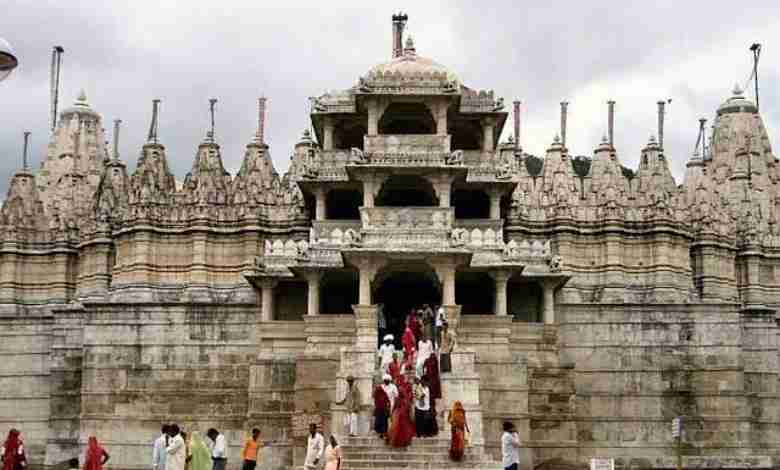
The Dilwara Temples, located in Mount Abu, Rajasthan, are considered among the most beautiful Jain pilgrimage sites in the world. Renowned for their extraordinary architecture and intricate marble carvings, these temples were built by the Chalukya dynasty between the 11th and 13th centuries CE.
The Dilwara Temples are prime examples of the Maru-Gurjara architectural style, famous for their use of pure white marble and exceptional craftsmanship.
Essential Information
- Location: Delwara, Mount Abu, Rajasthan 307501. They are situated within the lush green Aravalli hills, about 2.5 km from the main Mount Abu settlement.
- Timings: The temples are open for the Jain community from 6:00 AM, but for tourists, the visiting hours are specifically from 12:00 PM to 5:00 PM daily.
- Entry Fee: There is no entrance fee to the temples.
- Photography: Photography and mobile phones are generally not allowed inside the temple complex. Lockers are available to store these items.
- Dress Code: Visitors are required to dress modestly, ensuring their shoulders and knees are covered.
Architectural and Historical Highlights
- Five Temples: The complex is a group of five temples, each dedicated to a different Jain Tirthankara (spiritual teacher):
- Vimal Vasahi Temple: The oldest, built in 1031 CE by Vimal Shah, a minister of the Solanki king. It is dedicated to the first Tirthankara, Lord Adinath, and features a magnificent central dome with intricately carved concentric rings.
- Luna Vasahi Temple: Built in 1230 CE by two Jain ministers, Vastupal and Tejpal, and dedicated to the 22nd Tirthankara, Lord Neminath.
- Pittalhar Temple, Parshvanatha Temple, and Mahavir Swami Temple: These complete the group, showcasing similar incredible craftsmanship.
- Exquisite Carvings: The most notable feature is the level of intricate detail. The ceilings, pillars, doorways, and panels are covered in delicate sculptures of lotus buds, female figurines in dancing postures, and scenes from Jain mythology. The precision of the marble artistry is often referred to as “a dream in marble”.
- Legend of Payment: Folklore suggests that the artisans were paid in gold dust according to the weight of marble dust produced, a testament to the meticulous and labor-intensive work involved.
How to Reach
- By Air: The nearest airport is Udaipur Airport (Maharana Pratap Airport), which is approximately 185 km away.
- By Rail: The nearest railway station is Abu Road Railway Station, located about 28 km from Mount Abu. Taxis and buses are readily available from there.
- By Road: Mount Abu is well-connected by road, with regular buses and taxis linking it to major cities in Rajasthan and Gujarat.
8. Khajuraho Temples, Madhya Pradesh – 950 CE and 1000 CE
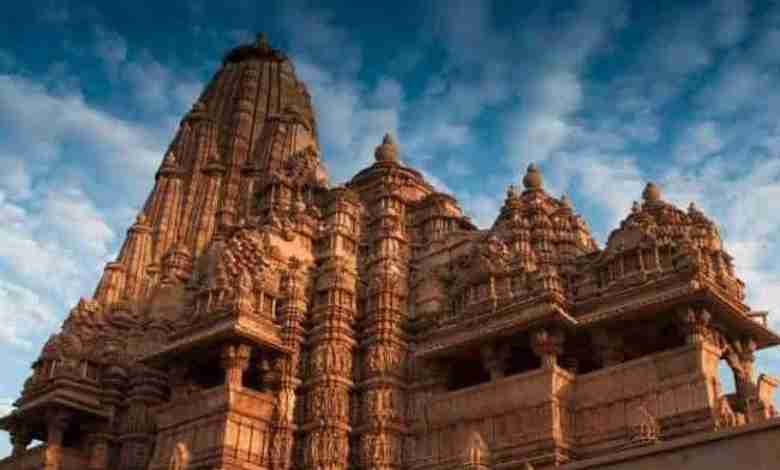
The Khajuraho Group of Monuments is a renowned UNESCO World Heritage Site in Madhya Pradesh, India, famous for its exceptional Nagara-style architecture and intricate, often erotic, sculptures that depict various aspects of life, spirituality, and human relationships. Built by the Chandela dynasty between 950 and 1050 CE, the site originally had about 85 temples, of which approximately 25 have survived.
Visiting Information
- Location: The temples are located in the Chhatarpur district of Madhya Pradesh.
- Timings: The temple complexes are generally open from sunrise to sunset, typically from around 6:00 AM to 6:00 PM.
- Entry Fee: The entry fee for Indian citizens is around ₹40 to ₹50, while for foreign visitors it is approximately ₹600. Children under 15 years old have free entry.
- Light and Sound Show: An evening sound and light show at the Western Group of Temples brings the history to life, with separate ticket fees.
Architectural and Historical Highlights
- Architectural Style: The temples follow the Nagara style of architecture, featuring intricate details, symbolism, and a distinct layout including a sanctum, vestibule, and assembly halls.
- Sculptures: While famous for their erotic carvings, these figures make up only about 10% of all sculptures and represent various forms of meditation, spiritual teachings, and relationships through art.
- Temple Groups: The monuments are divided into three groups:
- Western Group: The largest and most famous group, home to the magnificent Kandariya Mahadeva Temple (dedicated to Lord Shiva) and the Lakshmana Temple (dedicated to Lord Vishnu).
- Eastern Group: Contains Hindu temples (like the Brahma and Vamana temples) and four Jain temples, including the Parsvanath Temple and Adinath Temple.
- Southern Group: A smaller group with only two main temples: the Duladeo Shiva Temple and the Chaturbhuj Temple (dedicated to Lord Vishnu).
How to Reach
- By Air: The nearest airport is Khajuraho Airport (HJR), which is very close to the temple complex.
- By Rail: The nearest major railway station is Khajuraho Railway Station.
- By Road: Khajuraho is well-connected by road, with taxis and auto-rickshaws available for local transport and transfers from nearby cities like Jhansi or Satna.
Also Read: List of Top 10 Oldest Railway Station in India
9. Sanchi Stupa, Madhya Pradesh – 3rd century BC
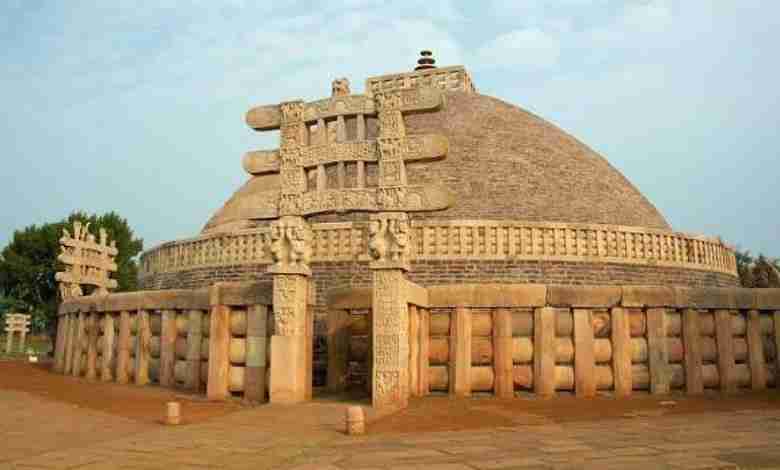
The Sanchi Stupa, a UNESCO World Heritage Site in Madhya Pradesh, India, is one of the oldest stone structures in the country and a primary example of early Buddhist architecture. Originally commissioned by Emperor Ashoka in the 3rd century BCE, the complex is a major pilgrimage center and a testament to the spread of Buddhism in ancient India.
Essential Information
- Location: The stupa complex is located on a hilltop in the town of Sanchi, in the Raisen district of Madhya Pradesh.
- Timings: The site is open daily from sunrise to sunset, typically 6:30 AM to 6:30 PM.
- Entry Fee: The ticket for Indian nationals is approximately ₹40 per person. For foreign nationals, the fee is around ₹600 per person. Entry is free for children under 15 years of age.
- Accessibility: The site offers a wheelchair-accessible entrance and parking facilities.
Architectural and Historical Highlights
- The Great Stupa (Stupa 1): The core was originally a simple brick dome built over the relics of the Buddha. During the Shunga period, it was enlarged to twice its size and covered in sandstone slabs.
- Toranas (Gateways): The four elaborately carved ornamental gateways, added in the 1st century BCE, are the most striking feature. They narrate scenes from the Buddha’s life and Jataka tales (stories of his previous lives) through intricate sculptures.
- The Ashoka Pillar: The site features an iconic Ashoka Pillar, whose famous four-lion capital was later adopted as the National Emblem of India. The original lion capital is now housed in the nearby Archaeological Museum Sanchi.
- Other Monuments: The complex includes several other smaller stupas, monasteries (viharas), and temples from various periods, including one of the earliest examples of a free-standing Gupta temple.
How to Reach
- By Air: The nearest major airport is Raja Bhoj Airport in Bhopal (BHO), which is about 46-55 km away. Taxis and buses are available for the one-hour journey to Sanchi.
- By Rail: The nearest major railhead is Bhopal Junction or Vidisha Railway Station (only 10 km away). Sanchi also has its own small railway station.
- By Road: Sanchi is well-connected by a good road network and lies on the Bhopal-Sagar state highway, making it easily accessible by car, bus, or taxi.
10. Ajanta Caves, Maharashtra – 2nd century BCE
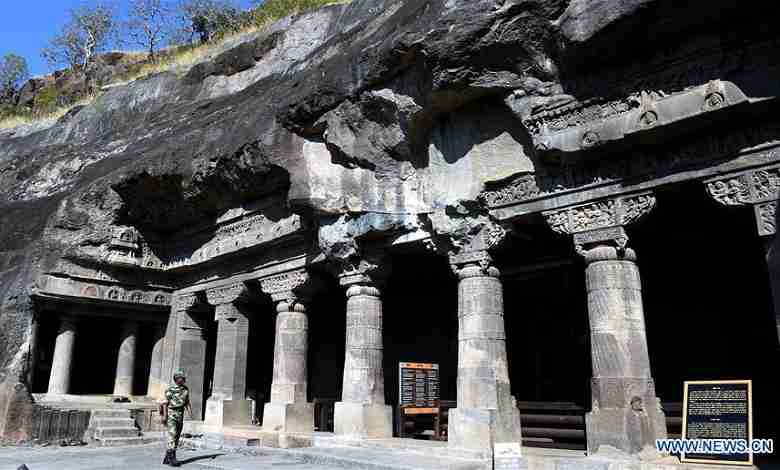
The Ajanta Caves are a spectacular collection of around 30 ancient rock-cut Buddhist cave monuments in the Aurangabad district of Maharashtra, India. Designated a UNESCO World Heritage Site in 1983, these caves are celebrated for their exquisite paintings and sculptures, considered masterpieces of ancient Indian art.
Essential Information
- Location: The caves are carved into a horseshoe-shaped cliff overlooking the Waghora River valley. They are located about 100 km north of Aurangabad (Chhatrapati Sambhaji Nagar), Maharashtra.
- Timings: The site is open from 9:00 AM to 5:00 PM (Tuesday to Sunday).
- Closed Day: The Ajanta Caves are closed on Mondays.
- Entry Fee: The fee for Indian nationals and visitors from SAARC/BIMSTEC countries is approximately ₹40 (slightly less for online payments), while for foreign visitors it is around ₹600.
- Best Time to Visit: The cool season, from October to March, offers the most pleasant weather for exploration. The monsoon season (August and September) is also popular as the surrounding natural scenery is at its most beautiful, with a waterfall in the gorge.
Key Highlights and History
- Masterpiece Paintings: The Ajanta caves are globally renowned for their vibrant mural paintings, which are some of the best-preserved examples of ancient Indian art. The paintings use natural pigments and depict scenes from the Buddha’s life and the Jataka tales (stories of his previous lives).
- Rock-Cut Architecture: The 30 monuments are a mix of Chaityas (prayer halls, such as Cave 10) and Viharas (monasteries or residential cells) carved directly into the basalt rock. The precision of the architecture, carved only with hammers and chisels, is an engineering wonder.
- Rediscovery: The caves remained hidden by dense forest for centuries until they were accidentally “discovered” in 1819 by a British officer, John Smith, during a hunting expedition.
Planning Your Visit
- Best Time to Visit: The winter months from November to March are ideal due to the pleasant weather. Visiting during the monsoon season offers lush green scenery around the gorge and active waterfalls.
- Photography: Photography is generally allowed in most areas, but the use of flash is prohibited inside the caves to protect the ancient paintings.
- Nearby Attractions: The Ellora Caves, another UNESCO site featuring Hindu, Buddhist, and Jain monuments, are located about 100 km away.
11. Virupaksha Temple, Karnataka – 7th century CE
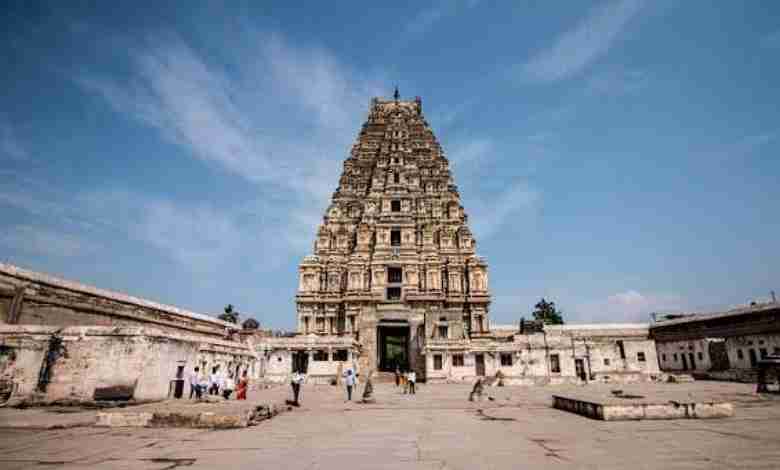
The Virupaksha Temple is a highly significant Hindu temple located in Hampi, Karnataka, a UNESCO World Heritage Site and the former capital of the Vijayanagara Empire. Dedicated to Lord Shiva in the form of Virupaksha (also known as Pampapathi), it is unique as the only major temple in the area that has been continuously functioning as a place of worship since the 7th century CE.
Essential Information
- Location: The temple is situated on the southern bank of the Tungabhadra River, at the western end of the Hampi Bazaar street.
- Timings: The temple is generally open daily in two phases: from 6:00 AM to 1:00 PM and then from 5:00 PM to 9:00 PM.
- Entry Fee: There is no entry fee for general admission to the temple complex. However, a special darshan (viewing of the idol) ticket may cost around ₹25, and camera fees apply (₹50 for still cameras, ₹500 for video cameras).
- Dress Code: A modest dress code is enforced to maintain the sanctity of the temple. Visitors should avoid wearing shorts, mini-skirts, sleeveless tops, and ripped jeans. Traditional attire that covers shoulders and knees is recommended.
- Best Time to Visit: The most pleasant time to explore Hampi and the temple is during the winter months, from November to February, when the weather is cooler.
Architectural and Historical Significance
- Vijayanagara Architecture: While the original shrine dates to the 7th century, most of the present complex was built and expanded during the Vijayanagara Empire, especially under the patronage of King Krishnadevaraya in the 15th and 16th centuries.
- Towering Gopuram: The most prominent feature is the magnificent nine-tiered eastern gateway tower (gopuram), which stands at approximately 50 meters (160 feet) tall and features intricate carvings of Hindu gods and goddesses.
- Unique Phenomenon: The temple is known for a fascinating architectural phenomenon where the inverted shadow of the main tower falls on a wall inside a dimly lit chamber within the complex.
- Living Heritage: Unlike many other ruins in Hampi, the Virupaksha Temple has remained an active place of worship throughout history, attracting thousands of devotees and tourists annually. The annual Chariot Festival and the Marriage Festival of Pampa Devi and Virupaksha are major events here.
12. Konark Sun Temple, Odisha – 13th century CE
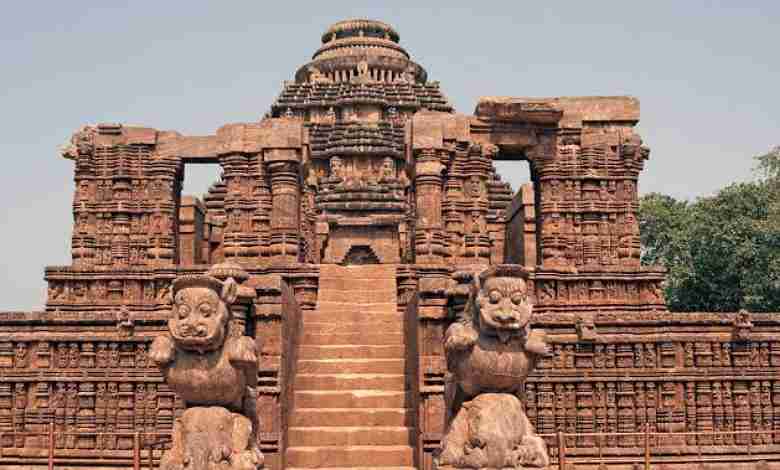
The Konark Sun Temple, located in Odisha, India, is a stunning 13th-century CE architectural marvel and a UNESCO World Heritage Site. Conceived as a colossal stone chariot for the Sun God, Surya, the temple is renowned for its intricate sculptures and unique design that symbolizes the passage of time.
Essential Information
- Location: The temple is situated on the coastline in Konark, approximately 35 km northeast of Puri and 65 km from the capital city of Bhubaneswar, Odisha.
- Timings: The complex is open daily from sunrise to sunset, generally from 6:00 AM to 8:00 PM.
- Entry Fee: The entry fee for Indian citizens is ₹40 (or ₹50 depending on the counter), while for foreign visitors, it is approximately ₹600. Children under 15 years old can enter for free.
- Light and Sound Show: An evening sound and light show is available for an additional fee, bringing the history and legends of the temple to life. It is not available on Mondays.
- Museum: The nearby Archaeological Museum is open from 10:00 AM to 5:00 PM (closed on Fridays).
- Guided Tours: Certified guides are available at the entrance to explain the carvings and history.
Architectural and Historical Significance
- Chariot Design: The temple is designed as a gigantic chariot pulled by seven majestic horses. Its base features twelve pairs of massive, intricately carved stone wheels (each about 3 meters in diameter) that serve as accurate sundials, capable of telling the time of day.
- Kalinga Architecture: The temple is considered the pinnacle of the Kalinga style of architecture. It originally comprised a main sanctum tower (sikhara) over 68 meters high, a large assembly hall (jagamohana), and a hall of dance (nata-mandira), though the main sanctum is now in ruins.
- Intricate Sculptures: The surviving structures are famed for their detailed carvings that cover every surface, depicting a wide range of subjects, including deities, musicians, dancers, celestial nymphs, and explicit kama and mithuna (erotic) scenes.
- “Black Pagoda”: European sailors used the temple as a major coastal landmark and referred to it as the “Black Pagoda” because of its dark stone color and its imposing presence on the shoreline.
- UNESCO Status: The temple was declared a UNESCO World Heritage Site in 1984 for its exceptional architecture and artistic brilliance.
13. Parshvanatha Temple, Madhya Pradesh – 10th century CE
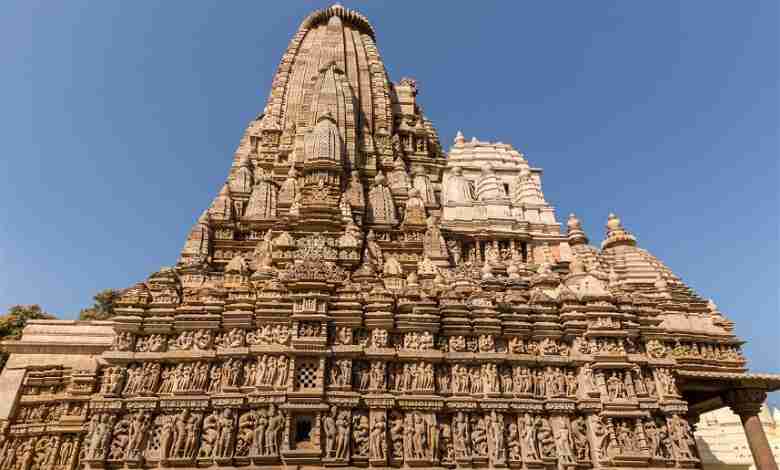
The Parshvanatha Temple is the largest and one of the finest Jain temples at the UNESCO World Heritage site of Khajuraho, Madhya Pradesh. Built in the 10th century CE during the Chandela dynasty, it is renowned for its intricate sculptures and unique architectural blend of Jain and Hindu themes.
Essential Information
- Location: The temple is part of the Eastern Group of Temples in Khajuraho town.
- Timings: It is open to the public during daylight hours, typically from 6:00 AM to 6:00 PM (exact timings can vary seasonally).
- Entry Fee: Access to the Eastern Group of temples, including the Parshvanatha Temple, is generally included in a single Archaeological Survey of India (ASI) ticket, which costs around ₹40 for Indian visitors.
- Guided Tours: Hiring a guide is recommended to fully appreciate the historical and architectural details of the carvings.
Architectural and Historical Significance
- Nagara Architecture: The temple exhibits a high point of the North Indian Nagara architectural style. It has a unique oblong plan without the typical transepts or balconied windows found in other Khajuraho temples.
- Sculptural Detail: The exterior walls are adorned with three bands of beautiful sculptures. These depict graceful apsaras (celestial maidens), dancers, musicians, flying couples, and various deities.
- Religious Syncretism: Interestingly, despite being a Jain temple, its outer walls feature numerous Hindu deities and Vaishnavite themes, including sculptures of Vishnu, Brahma, Rama, and Krishna, highlighting the religious tolerance of the Chandela period.
- The Magic Square: An important inscription found in the temple, dating to 954 CE, records the donation of gardens by a prominent Jain family member named Pahila. This inscription also includes one of the earliest known examples of a most-perfect magic square, where every sub-square sums to 34.
- Interior: The sanctum houses the idol of Parshvanatha under a seven-hooded serpent canopy, with sculptures of other Jinas flanking the main image.
14. Tungnath Temple, Uttarakhand – 8th century
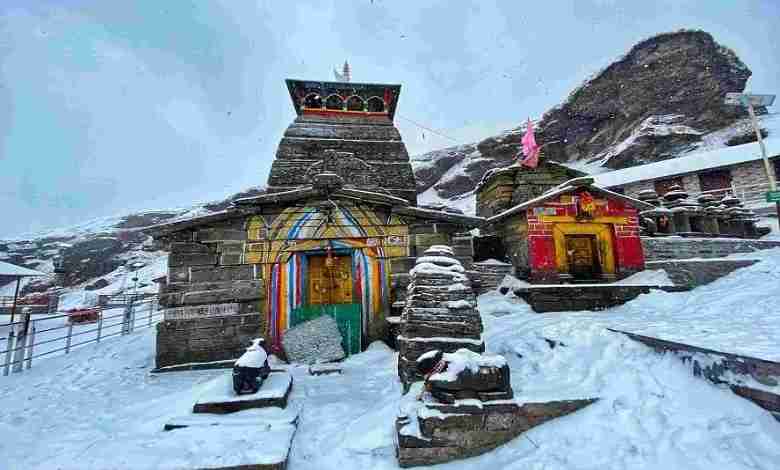
The Tungnath Temple, located in the Rudraprayag district of Uttarakhand, is the highest Shiva temple in the world, perched at an altitude of approximately 3,680 meters (12,073 feet). This ancient temple is an integral part of the sacred Panch Kedar pilgrimage circuit and is steeped in the mythology of the Pandavas from the Hindu epic, the Mahabharata.
Essential Information
- Location: The temple is nestled in the Chandranath Parvat range, accessible via a moderate 3.5 km trek from the town of Chopta, often called the “Mini Switzerland of India”.
- Timings: The temple’s kapat (doors) are open for pilgrims typically from May to October/November. During the operational season, the temple is usually open from 6:00 AM to 7:00 PM.
- Closed Season: Due to heavy snowfall, the temple remains closed during the winter months (November to April). The idol is moved to its winter seat at the Markandeya Temple in Makkumath village for continued worship.
- Entry Fee: There is no entry fee to visit the temple.
- Trek Difficulty: The trek from Chopta is considered moderately easy, but requires basic fitness due to the high altitude. It passes through lush green meadows and rhododendron forests, offering breathtaking views of Himalayan peaks like Nanda Devi and Trishul.
Historical and Religious Significance
- Panch Kedar Legend: According to legend, the Pandava brothers, after the Kurukshetra war, built the Panch Kedar temples to atone for their sins of killing their kin. Lord Shiva, in the form of a bull, disappeared into the ground at Guptkashi, and his body parts appeared at five different locations.
- Lord Shiva’s Arms: At Tungnath, it is believed that Lord Shiva’s arms (bahu) emerged and are worshipped here.
- Ancient Construction: The temple is estimated to be over 1,000 years old and built in the traditional North Indian (Katyuri) style of architecture using stone slabs.
15. Chennakeshava Temple, Belur, Karnataka – 1117 CE
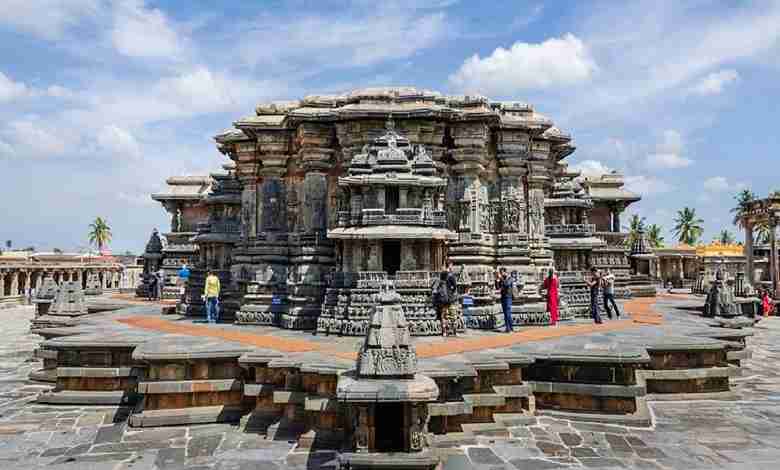
The Chennakeshava Temple in Belur, Karnataka, is an architectural masterpiece of the Hoysala era and a UNESCO World Heritage site. Dedicated to Lord Vishnu, the temple is renowned for its intricate carvings and exquisite sculptures that took over a century to complete.
Key Visitor Information
- Location: The temple is located on the banks of the Yagachi River in the Hassan district of Karnataka, about 220 km (137 miles) west of Bengaluru. The specific address is Temple Road, Belur, Karnataka 573115.
- Timings: The temple is generally open daily from 7:30 AM to 7:30 PM. Hours may change during festivals or special events.
- Entry Fee: There is no entry fee to visit the temple complex.
- Best Time to Visit: The ideal time to visit is during the cooler months, from November to February, when the weather is pleasant for exploring the outdoor complex.
- Facilities: The complex is wheelchair accessible. Restroom facilities are available, though some are outside the main entrance. Paid guides are available and highly recommended to fully appreciate the historical and artistic details.
- Nearby Attractions: The twin town of Halebidu, known for its Hoysaleswara Temple, is just 16 km away and is often visited alongside Belur. The scenic Yagachi Dam is also nearby.
Architecture and Significance
- Hoysala Craftsmanship: Built using soft soapstone, the temple is a prime example of the ekakuta (single shrine) style of Hoysala architecture.
- Intricate Carvings: The temple is renowned for its detailed sculptures, including over 80 Madanika figures (celestial maidens) and a gravity pillar in the courtyard. The precision and intricacy of the carvings, including delicate details like a housefly, are a major draw for visitors.
- Living Temple: The Chennakeshava temple is a living temple where worship is still conducted according to Hindu traditions.
FAQs About Oldest Temples of India
1. Which one is the oldest temple in India?
Mundeshwari Temple in Bihar is considered the oldest temple in India. It belongs to the 3rd century BCE and is dedicated to Lord Shiva and Shakti, which exists today as a functioning pilgrimage centre, illustrating the deep spirituality and artistic expression during the ancient times of Indian culture.
2. In India, which ancient one is carved from a single rock?
Kailasa Temple at Ellora, Maharashtra, carved in the 8th century CE, is a magnificent cave structure. This ancient Shiva temple in India boasts rock-cut architecture and evidence of the artistic skill and prowess of the Rashtrakuta dynasty.
3. Which Indian temple is dedicated to the Sun God?
The old temples of India, Konark Sun Temple in Odisha and the Sun Temple in Modhera, Gujarat, are some of the famous temples. It is dedicated to Surya, the god of the sun. These temples reflect minute carvings and accurate architectural settings with the sun’s movement.
4. What do you mean by Dravidian architecture in the ancient temples of India?
The Brihadeshwara and Meenakshi Temple feature tall gopurams, detailed carvings, and large courtyards, a part of Dravidian architecture. This style of architecture defines many old Indian temples in South India, blending art, devotion, and cultural heritage.
5. Are there any Jain temples among the oldest temples of India?
Dilwara Temples in Rajasthan are some of India’s best examples of ancient temples. Dating between the 11th and 13th centuries, Jain temples are famous for marble carvings depicting spiritual dedication and architectural precision.
6. Which is the highest Shiva temple in India?
Located at 12,073 feet, the Tungnath Temple is the world’s highest Shiva temple. Located in India, this temple from ancient times forms part of the Panch Kedar pilgrimage, with spiritual and scenic beauty against the grandeur of the Himalayas.
Published by: Murali Malalur
FOLLOW US: Facebook | Twitter | YouTube Channel | WhatsApp Channel | Instagram