

List Of Chief Justices Of India: The Chief Justice of India (CJI) is the head of the Indian judiciary and is responsible for upholding constitutional values and ensuring justice for every citizen. Each CJI brings a distinct vision and approach to strengthening the legal system during their tenure. Since the Supreme Court’s establishment on 26 January 1950, a total of 53 judges have served as Chief Justice of India.
Justice Surya Kant is the 53rd Chief Justice of India 2026, assuming office on 24 November 2025, with a tenure marked by his focus on constitutional rights and judicial reforms.
Table of Contents
Chief Justice of India
The Chief Justice of India (CJI) stands at the apex of the judicial system and ensures that the Constitution is upheld in both spirit and practice. The CJI oversees the Supreme Court’s functioning, allocation of cases, and judicial appointments while guiding the overall direction of India’s legal framework. Justice Surya Kant, serving as the 53rd CJI of India 2026, is known for his balanced and rights-oriented judicial approach. He is set to lead the judiciary through a 15-month tenure, which will conclude on 9 February 2027, upon reaching the age of retirement.
List of Chief Justice of India from 1950-2026
Since its establishment in 1950, the Supreme Court of India has been led by 53 Chief Justices, each playing a vital role in shaping the country’s judicial system. Below is the complete List of Chief Justice of India from 1950-2026:
Here’s the list of the Chief Justices of India from 1950 to present. The list includes:
| No. | Name | Date of Appointment | Held Office Till |
| 1 | Hon’ble Justice Harilal Jekisundas Kania | 26/01/1950 | 06/11/1951 |
| 2 | Hon’ble Justice M. Patanjali Sastri | 07/11/1951 | 03/01/1954 |
| 3 | Hon’ble Justice Mehr Chand Mahajan | 04/01/1954 | 22/12/1954 |
| 4 | Hon’ble Justice Bijan Kumar Mukherjea | 23/12/1954 | 31/01/1956 |
| 5 | Hon’ble Justice Sudhi Ranjan Das | 01/02/1956 | 30/09/1959 |
| 6 | Hon’ble Justice Bhuvneshwar Prasad Sinha | 01/10/1959 | 31/01/1964 |
| 7 | Hon’ble Justice P.B. Gajendragadkar | 01/02/1964 | 15/03/1966 |
| 8 | Hon’ble Justice A.K. Sarkar | 16/03/1966 | 29/06/1966 |
| 9 | Hon’ble Justice K. Subba Rao | 30/06/1966 | 11/04/1967 |
| 10 | Hon’ble Justice K.N. Wanchoo | 12/04/1967 | 24/02/1968 |
| 11 | Hon’ble Justice M. Hidayatullah | 25/02/1968 | 16/12/1970 |
| 12 | Hon’ble Justice J.C. Shah | 17/12/1970 | 21/01/1971 |
| 13 | Hon’ble Justice S.M. Sikri | 22/01/1971 | 25/04/1973 |
| 14 | Hon’ble Justice A.N. Ray | 26/04/1973 | 28/01/1977 |
| 15 | Hon’ble Justice M. Hameedullah Beg | 29/01/1977 | 21/02/1978 |
| 16 | Hon’ble Justice Y.V. Chandrachud | 22/02/1978 | 11/07/1985 |
| 17 | Hon’ble Justice P.N. Bhagwati | 12/07/1985 | 20/12/1986 |
| 18 | Hon’ble Justice R.S. Pathak | 21/12/1986 | 18/06/1989 |
| 19 | Hon’ble Justice E.S. Venkataramiah | 19/06/1989 | 17/12/1989 |
| 20 | Hon’ble Justice Sabyasachi Mukherjee | 18/12/1989 | 25/09/1990 |
| 21 | Hon’ble Justice Ranganath Misra | 25/09/1990 | 24/11/1991 |
| 22 | Hon’ble Justice K.N. Singh | 25/11/1991 | 12/12/1991 |
| 23 | Hon’ble Justice M.H. Kania | 13/12/1991 | 17/11/1992 |
| 24 | Hon’ble Justice L.M. Sharma | 18/11/1992 | 11/02/1993 |
| 25 | Hon’ble Justice M.N. Venkatachaliah | 12/02/1993 | 24/10/1994 |
| 26 | Hon’ble Justice A.M. Ahmadi | 25/10/1994 | 24/03/1997 |
| 27 | Hon’ble Justice J.S. Verma | 25/03/1997 | 17/01/1998 |
| 28 | Hon’ble Justice M.M. Punchhi | 18/01/1998 | 09/10/1998 |
| 29 | Hon’ble Dr. Justice A.S. Anand | 10/10/1998 | 31/10/2001 |
| 30 | Hon’ble Justice S.P. Bharucha | 01/11/2001 | 05/05/2002 |
| 31 | Hon’ble Justice B.N. Kirpal | 06/05/2002 | 07/11/2002 |
| 32 | Hon’ble Justice G.B. Pattanaik | 08/11/2002 | 18/12/2002 |
| 33 | Hon’ble Justice V.N. Khare | 19/12/2002 | 01/05/2004 |
| 34 | Hon’ble Justice S. Rajendra Babu | 02/05/2004 | 31/05/2004 |
| 35 | Hon’ble Justice R.C. Lahoti | 01/06/2004 | 31/10/2005 |
| 36 | Hon’ble Justice Y.K. Sabharwal | 01/11/2005 | 13/01/2007 |
| 37 | Hon’ble Justice K.G. Balakrishnan | 14/01/2007 | 12/05/2010 |
| 38 | Hon’ble Justice S.H. Kapadia | 12/05/2010 | 28/09/2012 |
| 39 | Hon’ble Justice Altamas Kabir | 29/09/2012 | 18/07/2013 |
| 40 | Hon’ble Justice P. Sathasivam | 19/07/2013 | 26/04/2014 |
| 41 | Hon’ble Justice R. M. Lodha | 27/04/2014 | 27/09/2014 |
| 42 | Hon’ble Justice H.L. Dattu | 28/09/2014 | 02/12/2015 |
| 43 | Hon’ble Justice T. S. Thakur | 03/12/2015 | 03/01/2017 |
| 44 | Hon’ble Jagdish Singh Khehar | 04/01/2017 | 27/08/2017 |
| 45 | Hon’ble Justice Dipak Misra | 28/08/2017 | 02/10/2018 |
| 46 | Hon’ble Ranjan Gogoi | 03/10/2018 | 17/11/2019 |
| 47 | Hon’ble Sharad Arvind Bobde | 18/11/2019 | 23/04/2021 |
| 48 | Hon’ble Nuthalapati Venkata Ramana | 24/04/2021 | 26/08/2022 |
| 49 | Hon’ble UU Lalit | 27/08/2022 | 08/11/2022 |
| 50 | Hon’ble DY Chandrachud | 09/11/2022 | 10/11/2024 |
| 51 | Hon’ble Justice Sanjiv Khanna | 11/11/24 | 13/05/25 |
| 52 | Hon’ble Justice B R Gavai | 14/05/25 | 23/11/25 |
| 53 | Hon’ble Justice Surya Kant | 24/11/25 | 09/02/26 |
Also Read: List of Prime Ministers of India from 1947 to till date
Chief Justice of India Appointment Process
The Constitution does not specifically outline the Chief Justice of India Appointment Process (CJI), but over time, conventions and seniority have guided the selection.
- Seniority Principle: The senior-most Supreme Court judge is usually recommended for the position.
- Recommendation Process: The outgoing CJI suggests their successor based on seniority.
- Executive Approval: The Union Law Minister forwards the recommendation to the Prime Minister, who advises the President for final approval.
- Exceptions: In 1973 and 1977, seniority was bypassed, but a 1993 ruling reinforced the convention of appointing the senior-most judge.
First Chief Justice of India
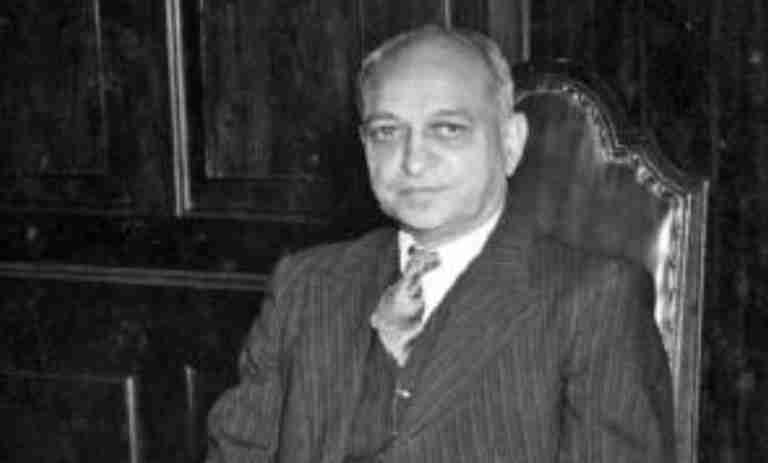
Justice Harilal Jekisundas Kania became First Chief Justice of India on January 26, 1950, and served until his passing on November 6, 1951. As the first head of the Supreme Court, which replaced the Federal Court of India, Justice Kania played a key role in shaping the country’s judicial system after independence. His tenure was crucial in establishing judicial independence and interpreting the newly adopted Constitution. The decisions made under his leadership set important legal precedents, laying the foundation for the Supreme Court’s functioning in the years to come.
Current Chief Justice of India
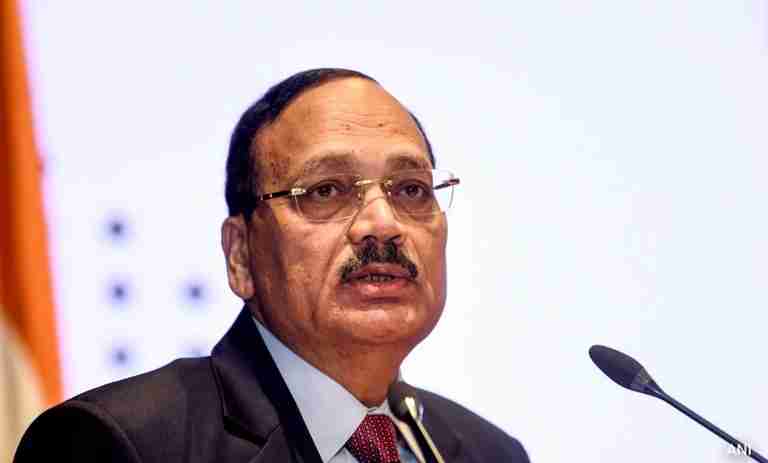
As the 53rd Chief Justice of India, Justice Surya Kant leads the functioning of the judiciary, oversees the allocation of cases, and constitutes benches for significant matters. His tenure reflects a strong focus on protecting constitutional rights, improving judicial efficiency, and strengthening transparency in the justice system. Known for his balanced and citizen-centric approach, he has contributed to key constitutional discussions and major judicial reforms. Justice Surya Kant’s leadership continues to shape the Supreme Court’s role in upholding justice and constitutional integrity.
Notable Judgments by Chief Justice Surya Kant:
- Article 370 Abrogation: He was part of the bench that upheld the abrogation of Article 370, supporting the reorganization of Jammu & Kashmir.
- Pegasus Spyware Surveillance: In a high-profile case, he co-authored a judgment ordering a technical committee to investigate alleged use of Pegasus, holding that “national security” cannot be a blanket shield.
- Sedition Law (Section 124A IPC): He was on the bench that put the colonial-era sedition law in abeyance, suspending new FIRs till a review is done, a major win for free speech.
- One Rank One Pension (OROP): He upheld the OROP scheme for ex-servicemen, calling it constitutionally valid.
- Gender Justice & Local Governance: He reinstated a woman sarpanch who had been removed unfairly and decried gender bias, showing his commitment to grassroots democracy.
- Women in Bar Associations: He directed that one-third of seats in bar associations (including SC Bar) be reserved for women.
- Environmental Protection: In Jitendra Singh v. Ministry of Environment, he held that village ponds are “public utilities,” and their destruction can violate the right to life (Article 21).
- Victim’s Right to be Heard: In Jagjeet Singh v. Ashish Mishra, he ruled that victims have the right to be heard right from the investigation stage, not just during trial.
Next Chief Justice of India
Justice Vikram Nath is set to become the next Chief Justice of India after Justice Surya Kant, serving from 7 February 2027 to 23 September 2027, a tenure of nearly eight months. Elevated to the Supreme Court in August 2021, he previously served in the Allahabad High Court and has developed strong expertise in labour law, service law, and civil law. During his time in the Supreme Court, he has been part of 180 benches and has authored 40 judgments, reflecting his consistent contribution to the judiciary.
Succeeding Chief Justices of India (2026-2033)
If the seniority principle continues to guide appointments, the following eight judges will successively serve as Chief Justices of India (CJI) from 2026 to 2033. Each of these judges has made significant contributions to the Indian judiciary through landmark judgments and constitutional interpretation. The list below highlights their expected tenures, judicial achievements, and key constitutional moments, including the historic appointment of the first female CJI.
Succeeding Chief Justices of India (2026-2033)
1. Justice Surya Kant
- Expected Tenure: 1.2 years
- Date of Retirement: 9 Feb 2027
- Significance: From Punjab & Haryana HC; part of Constitution Bench on Abrogation of Article 370 and Citizenship Act validity; authored 291 SC judgments; upheld minority status of AMU (dissent).
2. Justice Vikram Nath
- Expected Tenure: 7 months
- Date of Retirement: 23 Sept 2027
- Significance: From Allahabad HC; Chief Justice of Gujarat HC; sat on Bench deciding Bhopal Gas Tragedy compensation and SC/ST sub-classification; authored 260 judgments.
3. Justice B.V. Nagarathna
- Expected Tenure: 36 days
- Date of Retirement: 30 Oct 2027
- Significance: First Woman Chief Justice of India; known for dissent in Demonetisation case; emphasized constitutional procedure and federal balance; authored 326 judgments.
4. Justice P.S. Narasimha
- Expected Tenure: 6+ months
- Date of Retirement: 4 May 2028
- Significance: Third Bar-elevated CJI; argued landmark cases: Ayodhya dispute, NJAC case, Euthanasia verdict; authored 218 judgments; dissent on arbitration clause violating Article 14.
5. Justice J.B. Pardiwala
- Expected Tenure: 2+ years
- Date of Retirement: 11 Aug 2030
- Significance: From Gujarat HC; EWS Reservation judgment; dissent in Citizenship Act Section 6A; rulings on Governor assent timelines and stray dog relocation; 307 authored judgments.
6. Justice K.V. Viswanathan
- Expected Tenure: 10 months
- Date of Retirement: 25 May 2031
- Significance: Fourth CJI from the Bar; represented Internet Freedom Foundation in WhatsApp privacy case; involved in marriage equality plea; 78 authored judgments; promoted judicial reforms.
7. Justice Joymalya Bagchi
- Expected Tenure: 4 months
- Date of Retirement: 2 Oct 2031
- Significance: From Calcutta HC; first judge from Calcutta to reach CJI post since 2013; part of Electoral Rolls Review case; 17 judgments; emphasized judicial inclusion in appointments.
8 Justice Vipul Pancholi
- Expected Tenure: 1.5 years
- Date of Retirement: May 2033
- Significance: From Gujarat HC; later Chief Justice of Patna HC; appointment debated within Collegium; will be 60th CJI; key judgments expected in judicial accountability and reform.
Chief Justice of India FAQs
Q1. Who is the present Chief Justice of India?
Ans. Hon’ble Mr. Justice B R Gavai is serving as the Current Chief Justice of India.
Q2. Who was the first woman Chief Justice in India?
Ans. India has never had a woman Chief Justice of India (CJI). However, Justice B.V. Nagarathna is set to become the first Woman CJI in September 2027
Q3. Who is the 44 Chief Justice of India?
Ans. Justice Jagdish Singh Khehar served as the 44th Chief Justice of India from January 4, 2017, to August 27, 2017. He was the first Sikh CJI.
Q4. Who is the current Chief Supreme Justice?
Ans. The current Chief Justice of India is Justice B.R. Gavai, serving since 14 May 2025 and retiring 23 November 2025
Q5. What is the salary of CJI in India?
Ans. The Chief Justice of India (CJI) earns a monthly salary of ₹2,80,000
FOLLOW US: Facebook | Twitter | YouTube Channel | WhatsApp Channel | Instagram